Thursday, July 9, 2009

Statement from Anglican, Catholic, and Uniting Churches

A Statement of Concern Regarding Mining and Agriculture on the Darling Downs


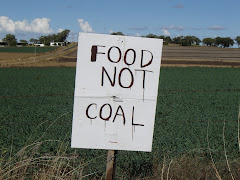
The local leadership of the Anglican, Catholic and Uniting Churches on the Darling Downs have great concerns about the impact of some proposed mining activity on prime agricultural land. They support calls for a regional plan that would identify areas which could be mined and others which should be kept for sustainable agriculture and food production. Two areas in the region currently under consideration for coal mining are Felton and Haystack Plain.

Caring for creation is a strong part of the three Christian traditions. We believe that we are called to be wise stewards of the earth. In terms of our fragile planet we are facing an ecological crisis. Respect for nature and ecological responsibility are key parts of our faith.

Transformation to wise and sustainable use of the environment is at heart a spiritual matter. Environmental concern is a legitimate and necessary part of a Christian's response to God's loving provision for us. (Green by Grace A Report prepared for the General Synod of the Anglican Church of Australia 2004)
Experience shows that disregard for the environment always harms human coexistence, and vice versa. It becomes more and more evident that there is an inseparable link between peace with creation and peace. (Message of his Holiness Pope Benedict XVI for the celebration of the World Day of Peace 1 January 2007)
We are concerned with the basic human rights of future generations and will urge the wise use of energy, the protection of the environment and the replenishment of the earth’s resources for their use and enjoyment. (Uniting Church, Statement to the Nation, 1977)

As communities of faith we stand in solidarity with those farmers who fear for their security and future way of life at this time. We also understand the contribution of mining and the generation of electricity in our region. We have a particular perspective on development which centres on the human person, the family and the community. When we consider future planning or development our primary question would be, “What is happening to the people?” rather than “What is happening to the economy?”


With the current world food shortage we believe it is important to protect land that has a history of sustainable food production. With a growing understanding about the impact of climate change we would also urge the Queensland State government to consider alternatives to coal mining in the Felton and Haystack Plain districts. These alternatives should be more sustainable and contribute more to the local community and economy.

We have concerns that the proposed coal mines will have an irreversible damaging impact on the soil and people of Haystack Plains and Felton. We would urge respectful and genuine dialogue between the resources and agricultural sector. For generations farmers in the Felton and Haystack Plains district have produced food for the wider Australian and international community. They have adapted their practises to ensure that future families can also live from and with the land. Our hope is that decisions made on the future use of these areas are based on the common good of all humanity.

Bishop Rob Nolan (Bishop of the Western Region, Anglican Diocese of Brisbane)

Bishop William Morris (Catholic Diocese of Toowoomba)

Sharon Kirk (Presbytery Minister Uniting Church in Australia Downs Presbytery)

Friday, June 26, 2009

Friends of Felton wins Carbon Challenge!


Congratulations to the Friends of Felton team who won their section of the Upper Condamine Carbon Challenge. The competition was run as part of the Qld Government's Low Carbon Diet community funding project, which encourages individuals to reduce their greenhouse gas emmissions. Our team installed solar panels for electricity generation, changed lightbulbs, planted trees, and switched to more efficient household appliances & cars, amongst other things. Team Leader Janet Bishop said the group wanted to show that "we are committed to reducing the impact of greenhouse gas emissions. By taking the Carbon Challenge, we reduced the need for new coal based power sources such as the proposed project in the Felton Valley. We can change the way we live and use energy."

Monday, June 22, 2009

Windmills and solar panels instead of dirty “Clean Coal”

MEDIA RELEASE 22nd June 2009

FRIENDS OF FELTON Inc.


Friends of Felton today welcomed the release of the Queensland Government’s Renewable Energy Plan and offered Felton as a potential renewable energy site providing the Government bans coal mining development in the area.

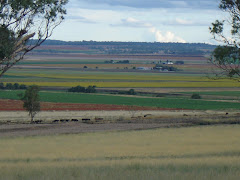
The Felton Valley, 30km southwest of Toowoomba, is under threat from a proposal by Ambre Energy to build a 12.8 million t/yr open-cut coal mine, a petrochemical plant to convert the coal into liquid fuel, and a power station.

Spokesman Rob McCreath said “We know that the so-called ‘Felton Clean Coal Project’ would destroy and contaminate a large area of prime farmland with disastrous consequences for the environment and the local community with no net gain in employment. On the other hand, renewable energy production would co-exist easily with top quality food production and provide a net gain in employment without harming the environment or the community.”

Premier Anna Bligh said yesterday that “climate change is one of the great challenges of our age”.

Friends of Felton stands ready to play its part in meeting that challenge.


ENDS
www.friendsoffelton.blogspot.com

Saturday, June 6, 2009

Call an ambulance

Minister for Mines, Energy, and Natural Resources, Stephen Robertson, declined an invitation to take part in a discussion with FOF President Rob McCreath on Agriculture v Mining on ABC 612 Brisbane last Thursday night. This discussion was a follow-up to a programme on Monday evening, involving John Cotter, Agforce President, and Michael Roche, Chief Executive of Qld Resources Council. Recordings of both discussions can be heard here -
http://blogs.abc.net.au/queensland/2009/06/agriculture-v-m.html?program=612_evenings

Incidentally, if you listen to the recording you will hear Michael Roche say "the farmers at Felton are selling". This is very misleading. The truth is that Ambre Energy has bought 1 farm of 96ha. The area covered by Ambre's proposed project is approx 2800ha, and the first stage covers 355ha. Besides, according to the law, ownership of the land does not in any way influence the granting of a Mining Lease. It's a pity the Minister wasn't there on Thursday night to put the record straight.

If he had been there, no doubt he'd have brought out the Govt's favourite line -

"Agriculture and mining have co-existed for over 100 years, and there's no reason why they can't continue to co-exist".

The fact is that coal mining destroys farmland, pollutes rivers, and drains underground aquifers. When the coal is burned, it produces greenhouse gases which accelerate global warming, giving us more frequent and severe droughts.

Mining co-exists with agriculture as cancer lives in the body, not noticed at first, but gradually eating away until the vital organs are threatened. It's time to call an ambulance!

Thursday, May 21, 2009

Nobody's fooled

Readers of the Initial Advice Statement (Dec 08) in Ambre Energy's mining lease application for the so-called Felton "Clean Coal Demonstration Project" may be under the impression that Ambre plans to build a much smaller plant at Felton than the 12.8 million tonnes/year monster they originally proposed. Indeed, page 3 has the following statement -

"The mine will be developed in two stages; the initial stage will involve the extraction of 800,000 tpa with the second stage expanding to 3.8 Mtpa."

Read the whole thing here - http://www.ambreenergy.com/_uploads/22256IAS.pdf

It seems Ambre have one story for the EPA and Felton locals, and another for potential investors. Have a look at the program for a briefing given by Ambre Energy to the Mining & Energy Services Council of Australia in Brisbane last week -


BRISBANE BRIEFING
Thursday 14 May 2009
Ambre Energy - Felton Mine and Dimethyl Ether Pilot Plant Project
Speaker: Steve Messiter – Director Project Development, Ambre Energy
Ambre Energy Limited is proposing to build and operate a world-class clean coal gasification plant near Felton,
approximately 30km south west of Toowoomba and 10km south east of Pittsworth producing a hydrogen-rich
synthesis gas for the following purposes:
· Production of 2.8 million tonnes per year of dimethyl ether (DME);
· Generation of 650 MW of electricity using an Integrated Gasification Combined Cycle (IGCC) system.
The initial phase of the project will be a Demonstration Stage (scheduled for commissioning in 2011) involving
an 800,000 tonnes per year coal mine and a coal gasifier capable of producing 1,980 tonnes per day of a
hydrogen-rich syngas.
At final stage the open cut coal mine will provide 12.8 million tonnes of coal per year to the gasification plant.
The Project will also capture CO2 (1,339 tonnes per day at demonstration stage) for potential enhanced oil
recovery and geosequestration, produce by-products such as nitrogen for fertilizer production, and provide the
essential inputs for potential downstream olefins/plastics manufacturing facilities.
MESCA is Your Mining & Energy Industry Network
Program
3:45pm Registration
4:10pm Welcoming Address
4:20pm Major Sponsor’s Presentation
4:30pm Steve Messiter
Director Project Development , Ambre Energy
5:15pm Networking and refreshments
Details
Date: Thursday 14 May 2009
Venue: Hillstone St Lucia (St Lucia Golf Course)
Carawa St, St Lucia
Parking: Free onsite
Cost: MESCA Members $44.00 (inc GST)
$88.00 (2-4 Members) (inc GST)
Non Members $176.00 per person

Unfortunately, Friends of Felton couldn't afford the entry fee, but our spy behind the bar tells us the grand plan is little changed from Ambre's Initial Advice Statement (July08), available here in 2 parts -

http://www.scribd.com/doc/10841606/Ambre-Energy-Initial-Advice-Statement-2872008-Part-1


http://www.scribd.com/doc/10841900/Ambre-Energy-Initial-Advice-Statement-2872008-Part-2

Readers might also be interested in this critique from Dr Philip Machanick, University of Qld -

http://www.scribd.com/doc/11685961/Ambre-Felton-2008-critique

Thursday, May 14, 2009

Response from Mines Minister & Ambre Energy

Farmers say coal will be royalty-free
Steve GrayMay 12, 2009
Approval of an open-cut coal mine on the Darling Downs would provide no financial benefit to Queensland taxpayers, say farmers whose land is threatened.
Farmers have legal advice indicating that Ambre Energy would not have to pay any royalties on the coal it intends to mine.
Ambre Energy plans to build a 12.8 million tonne a year open-cut coal mine, a petrochemical plant to convert the coal into liquid fuel, and a power station in the Felton Valley, 30km southwest of Toowoomba.
Local farmers and the community, who have formed the Friends of Felton, say the mine would destroy some of the finest agricultural land in Australia and have negative social and environmental impacts.
Spokesman Rob McCreath said the group had been advised that no royalties would be payable to the state, meaning the mine would have no direct economic benefit to taxpayers.
"Legal advice obtained by Friends of Felton indicates that royalties payable on any coal mined at Felton would not be payable to the Queensland government," Mr McCreath said.
He said a section of Queensland mining laws stated that "coal on or below the surface of the land is the property of the crown, except where that land was alienated in fee simple by the crown before 1 March, 1910".
"Farms at Felton were granted freehold title long before 1910," Mr McCreath said.
Asked if that was a correct interpretation of the law, Mines Minister Stephen Robertson said it was too early to discuss royalties.
"We first need to establish if there is going to be a mine at all before royalties are discussed," Mr Robertson said.
"All new mines must first meet the Queensland government's statutory requirements, particularly in relation to environmental standards, before any approval is granted.
"The public interest test will balance a range of considerations including environmental, economical and social impacts across the community."
Mr Robertson said the proposal would not go ahead unless it was in the best interests of the people of Queensland.
"Given the assessment process is still ongoing, it is far too early to make that decision."
Mr McCreath told AAP the project "clearly fails the public interest test".
A spokesman for Ambre Energy, Neil McGregor, said royalties would be paid on the coal, although in a small number of cases royalties could go to the landholder rather than the state.
"We won't know that until we investigate individual title documents," Mr McGregor said.
© 2009 AAP

Tuesday, May 12, 2009

Government would gain no royalties from a Felton coal mine


MEDIA RELEASE 11th May 2009

Government would gain no royalties from a Felton coal mine

The Felton Valley, 30km southwest of Toowoomba, Qld, is under threat from a proposal by Ambre Energy to build a 12.8 million t/yr open-cut coal mine, a petrochemical plant to convert the coal into liquid fuel, and a power station.

Legal advice obtained by Friends of Felton indicates that royalties payable on any coal mined at Felton would not be payable to the Queensland Government.

Section 8 (2) (b) of the Qld Mineral & Resources Act 1989 states –
“Coal on or below the surface of the land is the property of the Crown except where that land was alienated in fee simple by the Crown before 1 March 1910……”

Farms at Felton were granted freehold title long before 1910.

Spokesman Rob McCreath said- “The so-called Felton Clean Coal Project would have disastrous environmental impacts, destroy some of this country’s best farmland, and inflict huge social impacts on a large rural population. Our legal advice shows that there is no royalty bonanza in this for the Government. The Ambre Energy proposal clearly fails the ‘Public Interest’ test, and would in fact channel huge wealth into the hands of a few shareholders without meeting the costs it would inflict on the public at large through permanent and widespread damage to the natural environment.”